
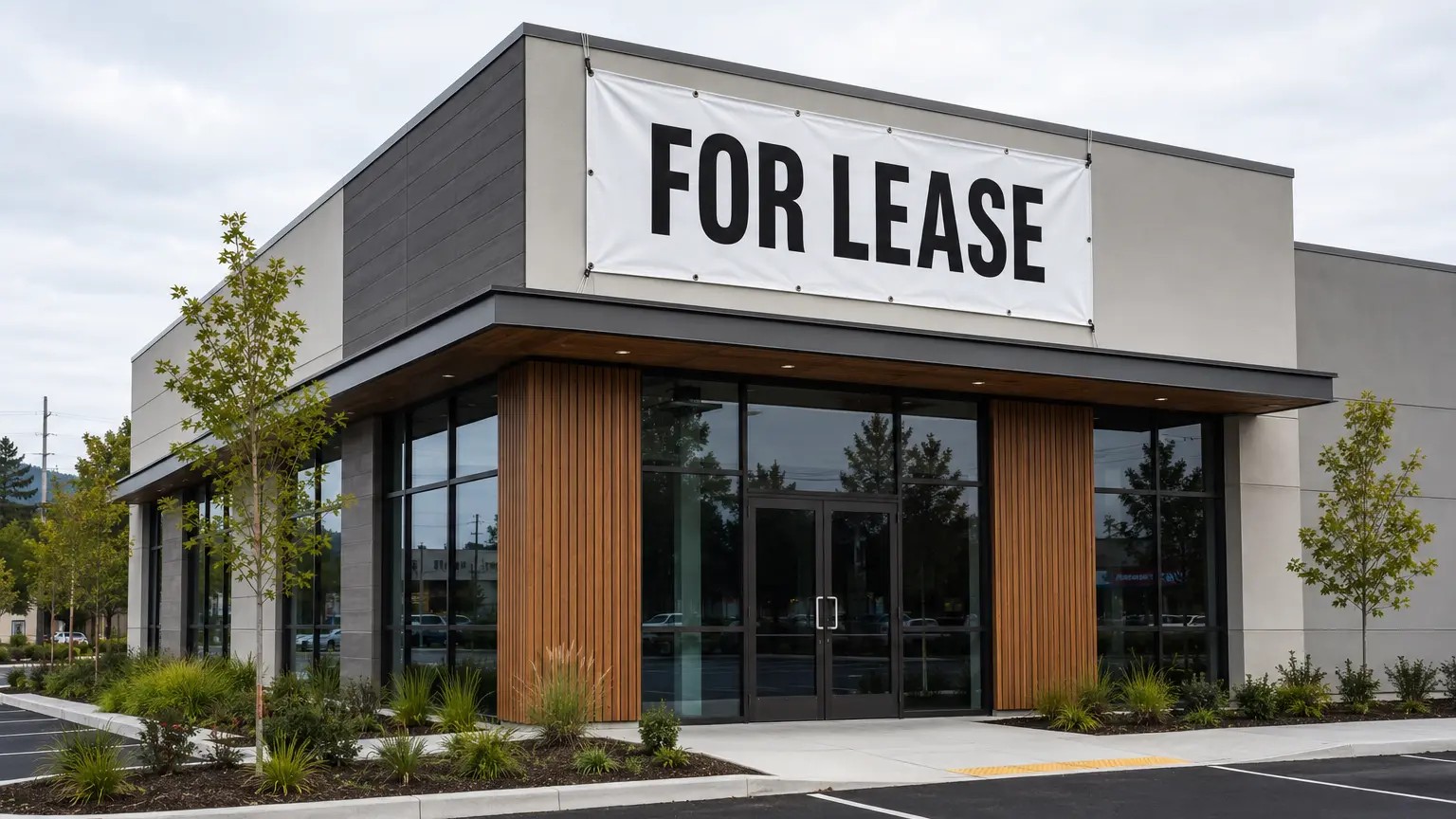
Triple-net leases are the most common commercial lease structure in BC, but the term gets used loosely. Some properties marketed as "NNN" don't actually recover all operating costs from tenants. Some leases include carve-outs that quietly leave significant expenses with the landlord. And the difference between a properly structured NNN lease and a poorly structured one can mean tens of thousands of dollars per year on a mid-sized property.
This guide explains what a triple-net lease actually is, how the cost-recovery mechanism works, the common variations you'll see in Vancouver commercial real estate, and the lease provisions that determine whether NNN actually delivers what it promises.
What "Triple-Net" Actually Means
A triple-net lease is a commercial lease where the tenant pays base rent plus their proportionate share of three categories of property expenses:
- Property taxes — the municipal property taxes assessed on the building
- Insurance — building insurance premiums (not the tenant's own contents or liability insurance)
- Operating costs / common area maintenance (CAM) — the day-to-day expenses of running the property
The "triple" refers to those three buckets. Under a true NNN lease, the landlord collects base rent for the use of the space, and the costs of owning and operating the building are passed through to tenants as additional rent.
The mechanism: tenants pay an estimated monthly amount toward their share of these expenses throughout the year (often called "additional rent" or "TMI" — taxes, maintenance, insurance). At year-end, the landlord reconciles actual costs against what was collected and either bills tenants for shortfalls or credits overpayments. This is the CAM reconciliation process.
Unfamiliar with terms like TMI, additional rent, or proportionate share? Our Commercial Property Management Glossary — BC & Greater Vancouver Terms Explained defines the key concepts used throughout this guide.
How the Cost Recovery Works
Each tenant pays a proportionate share of recoverable costs, typically calculated by floor area:
Tenant's share = (Tenant's leased square footage) ÷ (Total leasable square footage of the property)
A tenant occupying 5,000 sq ft in a 25,000 sq ft building pays 20% of recoverable operating costs.
What counts as recoverable depends on the lease language — and this is where most NNN leases differ from each other. A well-drafted NNN lease defines operating costs broadly to capture all legitimate property expenses. A poorly drafted one leaves gaps that the landlord ends up absorbing.
Typically recoverable items include property management fees, utilities for common areas, janitorial and waste removal, landscaping and snow clearing, HVAC servicing, elevator maintenance, security, exterior lighting, parking lot maintenance, signage, and repairs to common building systems.
For a full breakdown of which operating costs are recoverable and how they are billed back to tenants, see: CAM Charges in BC Commercial Leases — A Complete Guide for Landlords.
Variations You'll See in BC
Not every lease marketed as "triple-net" recovers everything. Three common variations:
Absolute NNN (Bondable Lease)
The tenant takes on essentially every cost related to the property, including major structural and capital items — roof, foundation, structural systems. The landlord's role is reduced almost to collecting rent. These are most common in single-tenant industrial or net-leased investment properties, where the tenant is creditworthy enough to be trusted with capital decisions.
Standard NNN
The tenant pays property taxes, insurance, and operating costs, but the landlord remains responsible for structural and capital items — roof replacement, foundation repairs, major mechanical system replacement, parking lot resurfacing beyond routine maintenance. This is the most common variation in BC multi-tenant commercial properties.
Modified NNN
Specific exclusions are negotiated into the operating cost definition. Common exclusions include capital expenditures, costs related to leasing other space (commissions, TI for other tenants), legal fees from disputes with other tenants, or first-year warranty repairs on new construction. Each exclusion represents a cost the landlord absorbs that would otherwise be recoverable.
When evaluating a property or a proposed lease, asking which variation applies is essential. "It's a triple-net lease" doesn't tell you what you actually need to know.
What Determines Whether NNN Works in Practice
A lease can be labeled NNN and still leave the landlord with significant unrecovered costs. Several provisions determine whether the recovery mechanism actually works.
Definition of Operating Costs
The operating cost definition is the heart of an NNN lease. A broadly drafted definition captures legitimate expenses including property management fees, administrative costs, capital expenditures (sometimes amortized over useful life), reserves for future repairs, and a reasonable management or administrative fee.
A narrow or ambiguous definition can exclude property management fees, cap recoverable expenses at a fixed dollar amount or percentage increase, or exclude administrative overhead. Each gap is a cost the landlord absorbs.
CAM Caps and Controls
Some leases include caps on annual operating cost increases — for example, a 5% year-over-year cap on controllable operating costs. Caps protect tenants from runaway costs but can leave the landlord absorbing the difference during years when actual costs spike (a hard winter, a major HVAC repair, utility rate increases).
A well-drafted cap distinguishes between controllable costs (where caps are reasonable) and uncontrollable costs like property taxes, insurance, and utilities (where caps are typically not applied because they're outside the landlord's control).
Audit Rights
Most commercial leases give tenants the right to audit the landlord's CAM reconciliation. The audit clause typically specifies the audit window (often one to two years after the reconciliation), who pays for the audit (typically the tenant unless overcharges exceed a threshold), and the remedy for overcharges (refund plus interest).
These provisions protect tenants from billing errors but also impose discipline on the landlord's reconciliation process. A poorly maintained reconciliation that doesn't survive an audit can result in clawbacks of recovered amounts.
Year-End Reconciliation Timing
The lease should specify when annual CAM reconciliations must be delivered to tenants — typically within 90 to 180 days of fiscal year-end. Missing this window can result in the landlord losing the right to bill for shortfalls. A management firm that doesn't reconcile on time is leaving money on the table.
Gross-Up Provisions
For multi-tenant properties with vacancy, gross-up provisions allow the landlord to calculate variable operating costs as if the building were fully occupied (typically 95–100%), then bill tenants their proportionate share. Without a gross-up provision, the landlord absorbs the operating cost share attributable to vacant space.
This matters most in properties with significant vacancy. A 60%-occupied building without gross-up means the landlord pays 40% of operating costs out of pocket.
What Tenants Often Push Back On
Even in markets where NNN is the norm, certain provisions get negotiated heavily. Knowing where the typical pressure points are helps with both initial leasing and renewal discussions.
Common tenant negotiations include excluding property management fees from recoverables, capping management fees as a percentage of operating costs, excluding capital expenditures or amortizing them over long periods, narrowing the definition of common area maintenance, and seeking specific exclusions for leasing-related costs (TI for other tenants, brokerage commissions).
Each negotiated concession shifts costs back to the landlord. Strong leases push back where appropriate while remaining commercially reasonable for the tenant.
NNN vs. Modified Gross vs. Gross — A Quick Comparison
For context with the broader lease structure landscape:
- Gross lease. Tenant pays a fixed rent. Landlord absorbs all operating costs. Less common in commercial settings; sometimes used in older buildings or specific tenant arrangements.
- Modified Gross lease. Some operating costs are recovered from tenants, others are landlord responsibility. The split is defined in the lease and varies considerably.
- Triple-Net (NNN) lease. Tenant pays property taxes, insurance, and operating costs in addition to base rent. The standard structure in BC commercial property.
The economics differ significantly. On a property with $200,000 in annual operating costs:
- Under a gross lease, the landlord absorbs all $200,000 (factored into the base rent quote).
- Under a properly structured NNN lease with full recovery, the tenant reimburses the full $200,000 as additional rent.
- Under a modified or poorly drafted NNN lease, the landlord might recover only $140,000–$180,000 — absorbing the difference.
This difference, multiplied across years of ownership, is often the single largest factor in actual net operating income on a commercial property.
For a side-by-side look at all four structures and when each makes sense, see: Commercial Lease Structures in BC Explained — Gross, Modified Gross, Net, and NNN Compared.
Questions to Ask Before Signing an NNN Lease
Whether you're reviewing a lease your tenant is signing or a lease you're inheriting on a property purchase, the following questions identify the most common gaps:
- Does the operating cost definition include property management fees and administrative costs?
- Are there caps on annual operating cost increases? Do they distinguish controllable from uncontrollable costs?
- Is there a gross-up provision for vacancy? At what occupancy threshold?
- Are capital expenditures recoverable? Amortized over what period?
- Are property taxes recoverable in full, including supplementals and reassessments?
- What is the CAM reconciliation timeline, and what happens if the deadline is missed?
- What audit rights does the tenant have, and what are the thresholds and consequences?
- Are there any specific exclusions from the operating cost definition?
- How is the tenant's proportionate share calculated, and is it adjusted for changes in leasable area?
- Are there any caps on management fees as a percentage of operating costs?
The answers tell you how much of the property's operating burden actually reaches the tenant versus how much stays with the landlord.
Why This Matters for Vancouver Commercial Owners
In the Metro Vancouver market, where property taxes are significant and operating costs (utilities, insurance, snow removal in some areas) continue to rise, the difference between a well-structured NNN lease and a poorly structured one materially affects ownership returns.
A property purchased on the assumption of full triple-net recovery — only to discover the existing leases include exclusions, caps, or gaps — can underperform projections substantially. Lease abstraction during acquisition due diligence is essential precisely because of this.
For owners with existing properties, lease renewals are often the natural opportunity to tighten the operating cost language and close gaps. The challenge is identifying which gaps matter most before the renewal conversation starts.
How RC-PM Approaches NNN Leases
RC-PM (Rain City Property Management) treats lease abstraction and CAM administration as core property management functions, not add-ons. For every property we take on, we review the existing leases to identify what's actually recoverable, where the gaps are, and where renewal opportunities exist to tighten the language.
Our CAM reconciliations are performed annually within the timelines specified in each lease, with detailed documentation that supports audit defense and tenant transparency. Contractor invoices on common area maintenance work flow through at cost — no markup — so reconciliations show tenants the actual costs being recovered.
For owners considering a new acquisition or facing a renewal, we can review existing lease language and identify the specific provisions that affect recovery before decisions are made.
If you'd like to know whether your current commercial leases are recovering operating costs effectively — or get a transparent assessment of a property you're considering — book a consultation.
Have a Question Not Covered Here?
Have a question about triple-net leases or commercial lease structures this guide didn't answer? Browse our FAQ for more details, or contact RC-PM directly — we're happy to discuss the lease structure on your specific property or one you're considering.